Breaking the Da Vinci Code by Darrell L. Brock PH.D
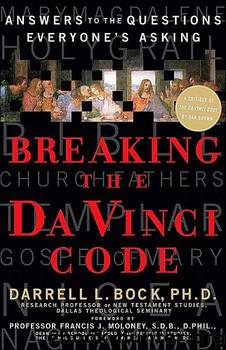
Author:Darrell L. Brock PH.D.
Format: mobi, epub
Published: 2009-12-26T18:56:10+00:00
There is an agenda here. It is the rejection of Christian faith as a historically unified set of core beliefs held over the centuries starting from the earliest period. Pagels's appeal ignores early traditional Christianity and how in the church's emerging Scripture there was a core belief expressed in the ancient creeds that themselves reflected the most major and central points of the New Testament. This core is orthodoxy in the best sense of that term. It is a Christianity with very distinct emphases that differ from the Gnostic texts or the collection of "secret" gospels we have just surveyed.
Pagels's claims and appeals reflect an agenda whose goal is to revise that orthodox faith. That effort is rooted in these ancient so-called secret documents that historically operated on the fringe of Christianity.
Interestingly and ironically perhaps this view is asking for something that neither of the early Christian alternatives in its time would have accepted as a viable option. The lesson of history is that these two approaches to Christianity were so very different from each other as to be incompatible from the view of each school.
Some variation among the four Gospels could be accepted within what we shall call traditional or orthodox Christianity (and these differences have been well documented for centuries). Yet there was never a persuasive combination that attempted to fuse all of these traditional expressions together with the more Gnostic-like ones in a manner that affirmed both views. So neither group could regard both expressions as Christian. One was claiming its roots in the past for under-standing the faith in the apostolic testimony and tradition, while the other was claiming access now to a direct kind of revelation that was of more significance than past revelation. This mutual acceptance that the other view was not Christian is something some modern historians in examining the movements seem unwilling to appreciate sufficiently. It is a point worth remembering as some extol the secrets of this rediscovered variant of Christian faith.
Again, I will let the ancient writers speak for themselves. Writing at the turn of the third century, Tertullian reacted to the work of Marcion, who gave his own "scripture" to defend his ideas in the second century. In Against Marcion, book 4, chapter 4, Tertullian wrote,
Download
Breaking the Da Vinci Code by Darrell L. Brock PH.D.epub
This site does not store any files on its server. We only index and link to content provided by other sites. Please contact the content providers to delete copyright contents if any and email us, we'll remove relevant links or contents immediately.
Professional Troublemaker by Luvvie Ajayi Jones(29671)
Empire of the Sikhs by Patwant Singh(23090)
Twilight of the Idols With the Antichrist and Ecce Homo by Friedrich Nietzsche(18642)
Plagued by Fire by Paul Hendrickson(17417)
The Sun and Her Flowers by Rupi Kaur(14529)
Norse Mythology by Gaiman Neil(13379)
A Journey Through Charms and Defence Against the Dark Arts (Harry Potter: A Journey Throughâ¦) by Pottermore Publishing(9277)
Fangirl by Rainbow Rowell(9262)
Adultolescence by Gabbie Hanna(8931)
Wonder by R.J. Palacio(8586)
Tools of Titans by Timothy Ferriss(8403)
Becoming Supernatural by Dr. Joe Dispenza(8225)
How to Bang a Billionaire by Alexis Hall(8162)
Wonder by R. J. Palacio(8118)
Crystal Healing for Women by Mariah K. Lyons(7934)
The Road Less Traveled by M. Scott Peck(7606)
The Lost Art of Listening by Michael P. Nichols(7509)
The Witchcraft of Salem Village by Shirley Jackson(7280)
The Institute by Stephen King(7048)
